All Categories
Featured
Table of Contents
In 2026, primary financial officers (CFOs) are under intense pressure to trim costs while placing their companies for growth. Relentless macroeconomic uncertainties consisting of lingering inflation, supply chain stress, skill shortages, and geopolitical volatility suggest CFOs should manage short-term spending plan discipline with longer-term tactical financial investments. Studies show . At the exact same time, a lot of financing chiefs plan to increase financial investment in information, automation, and advanced finance tools.
For instance, one large merchant's finance team used a structured cost-transformation program to lower costs while enhancing money circulation, ultimately contributing to success . This report analyzes how financing groups are attaining such results. Mentioning recent studies, case research studies, and professional analyses, it information where CFOs are cutting expenses (e.g.
cloud systems, Robotic Process Automation (RPA), predictive planning, ESG efforts). The findings are supported by quantitative data (from Gartner, Deloitte and market sources) and real-world examples. Sections cover the historic and present economic context, survey proof of CFO concerns, specific cost-cutting tactics and investment areas, illustrative case research studies, and future implications.
The backdrop for 2026 is characterized by relentless unpredictability. Inflation and rate of interest remain above pre-pandemic levels, global trade stress and regulative modifications continue to evolve, and companies deal with the crucial to become more nimble and technology-driven. As one analyst observes, CFOs in 2026 "will continue to browse unclear trade policy, tariffs and general financial unpredictability, in addition to digital transformation difficulties, expense pressures and talent spaces" .
Key Tips for Implementing GCC Models Successfully
Finance groups traditionally have had to stabilize accuracy and control with responsiveness; today, CFOs need to add a 3rd dimension:. Over the previous few years finance functions have undergone accelerated improvement. Advances in cloud-based ERP systems, AI and machine learning, and analytics platforms are making it possible for new methods to improve monetary processes and forecasts.
These technological shifts have actually coincided with external pressures: in 2024-2025 lots of industries faced greater input costs, tight labor markets for competent finance professionals, and unsteady need signals.
Importantly, CFOs no longer view cost cutting and financial investment as equally special. According to Gartner, "CFOs are navigating a complex, unstable environment where they require to keep tight control over expenses and be more nimble with monetary forecasting" . To put it simply, CFOs recognize that sensible budgeting should money the really capabilities (AI, information, danger modeling, etc) that will enable future development.
Global Outsourcing Vs Nearshore Centers: the Strategic Analysis
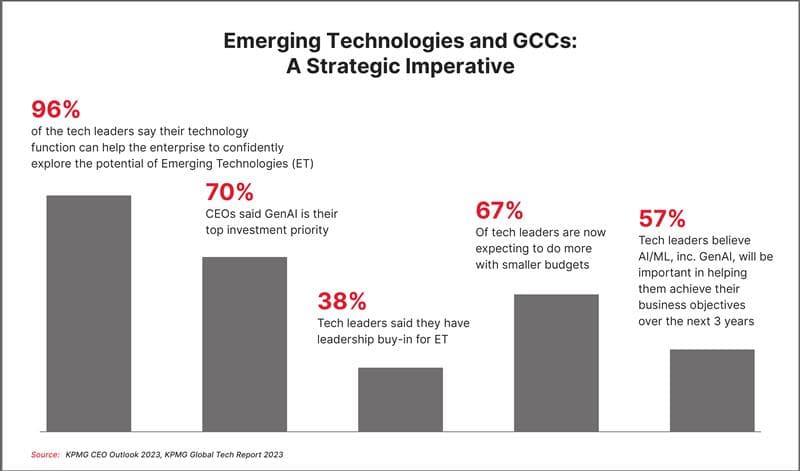
This means that even in the face of cost-cutting imperatives, CFOs are intentionally protecting even on innovation investments. One analysis of a Gartner survey found that although 67% of CFOs were cutting costs in mid-2025, virtually all were . The message is clear: CFOs see tactical technology and procedure financial investments as the method to "reinvent financing," not just eke out efficiency .
In the areas that follow, we first lay out the mid-2020s economic and business landscape that forms CFO programs. We then take a look at the dual focus of CFO priorities cost optimization growth enablers as evidenced by current surveys (e.g. Gartner, Deloitte, industry research studies). Subsequent areas analyze specific strategy areas: (consisting of budgeting approaches, headcount management, functional effectiveness, procurement, etc) and (innovation, analytics, ESG, danger management, talent development, and so on).
We go over longer-term ramifications: how these strategies prepare firms for 2026 and beyond. Leading into 2026, studies show that financing chiefs are stabilizing expense discipline with strategic change.
Offshore Vs Regional Centers: the Strategic Review
Figures prominently.
Boosting Process Optimization Through Global HubsDeloitte highlights that CFOs are getting in 2026 with renewed confidence: the CFO Self-confidence Score rose to 6.6 (on a 110 scale) in Q4 2025 the greatest because 2021 and 59% of CFOs judged it "a great time to take greater threats", up from simply 36% 3 months earlier .
This optimism is tempered by care: CFOs are prioritizing expense efficiency exactly so they have the versatility to fund the best initiatives. Additional surveys and reports enhance the exact same styles. A SharpEnd CFO in Asia (Allan Tan) describes the 2025/26 Asian service environment as a "monsoon" of difficulties (inflation, commodity swings, supply threat, green shift costs) that require expense strength as "the fuel for resilience, dexterity, and tactical development." .

Latest Posts
Critical Growth Tactics for Scaling Regional GCC Hubs
Can GCC Strategies Revolutionize Global Markets?
Global Employment Regulation Compliance: Key Trends